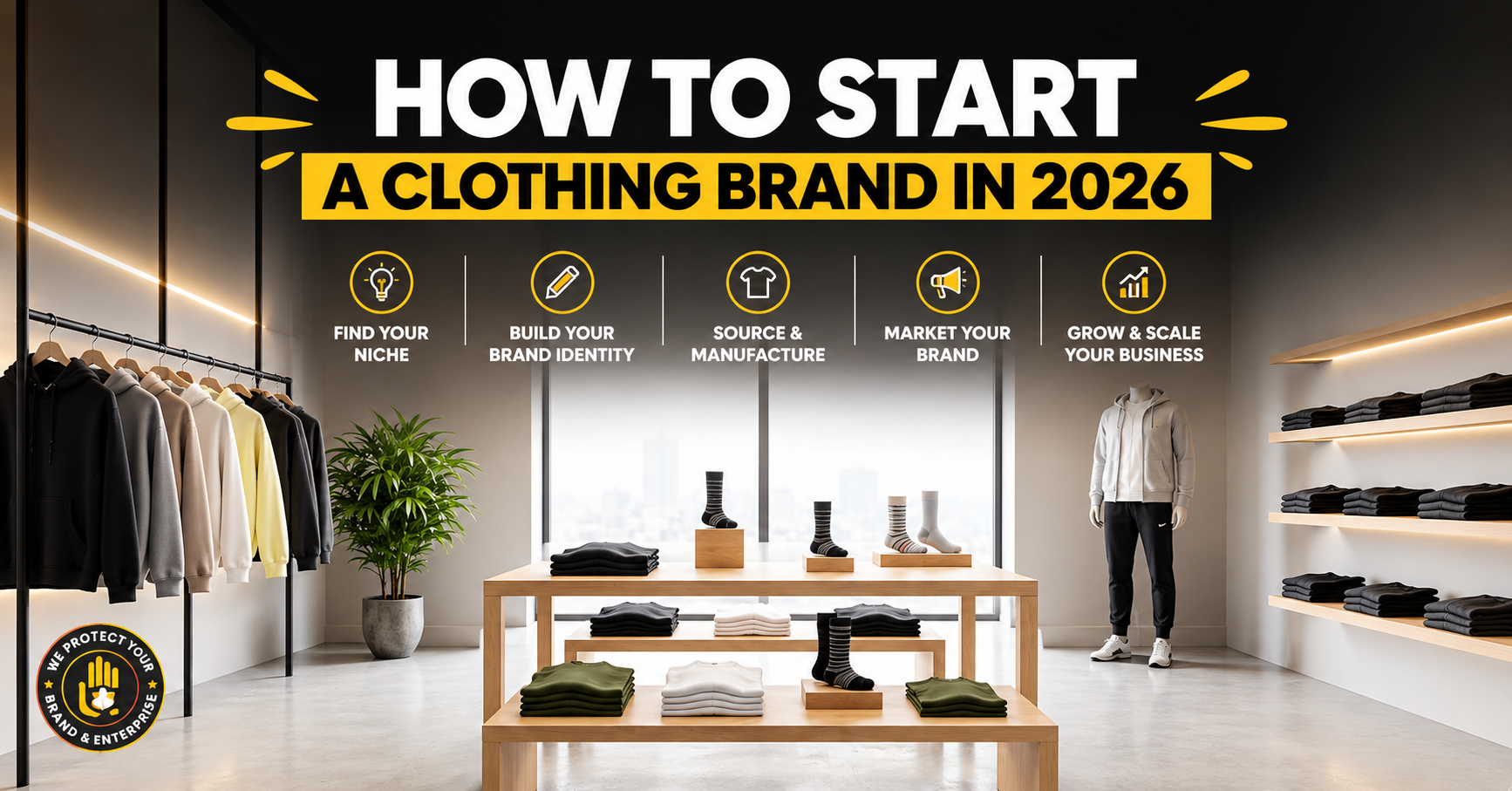
How to Start a Clothing Brand: A Practical Guide for Beginners
Starting a clothing brand may seem simple. You do not necessarily need a large investment, complicated paperwork, or extensive market research to get started. However, building a successful premium clothing brand requires careful planning, product knowledge, market understanding, and continuous improvement.
For beginners, the biggest challenge is not designing a beautiful product. It is selling the first batch, recovering the initial investment, and learning what customers genuinely want.
Here is a practical approach to getting started.
Before investing in production, identify your potential customers.
Ask yourself:
You do not need to answer every question perfectly before starting. However, you should have a clear idea of whom you are selling to and how you intend to reach them.
Your first batch should be designed to test a real market opportunity, not simply to fulfill your creative vision.
Many beginners spend a significant portion of their budget on product development before making a single sale. They invest in multiple samples, fabric experiments, design revisions, custom labels, and packaging without knowing whether customers will buy the finished products.
The result can be expensive inventory with uncertain demand.
A more practical approach is to develop a commercially viable product and move into a small production run as soon as the essential quality requirements are met.
For example, instead of spending months developing ten different T-shirt designs, consider producing a small quantity of one or two promising designs. Sell them, observe customer reactions, and use that information to decide what to produce next.
Remember, the first batch is not just inventory. It is also a real-world market test.
Small orders can have a disproportionately high cost per piece. Sampling, setup charges, printing, labels, packaging, and international shipping can all increase the initial investment.
Consider this illustrative example:
In this example, one sample could cost $180 before any additional expenses, while a 50-piece shipment would cost approximately $5 per piece.
These figures are illustrative, not fixed market rates. Actual costs will vary.
The lesson is simple: evaluate the total landed cost, not just the manufacturing cost.
Before placing an order, calculate production, freight, customs duties, taxes, packaging, payment fees, and other applicable expenses. Make sure your selling price leaves enough margin to operate sustainably.
Custom branding can create another financial challenge for startups.
Some suppliers of woven labels, printed care labels, and hangtags require minimum orders of hundreds or thousands of pieces. These minimums can leave a small brand paying for far more branding materials than it needs.
Fortunately, there are alternatives:
Your brand identity matters, but you do not need to order thousands of labels before proving that your product can sell.
A professional manufacturer can help translate your ideas into finished garments. Experienced suppliers understand fabric selection, garment construction, printing, embroidery, finishing, and the production requirements of different brands.
However, experience alone does not guarantee that the finished products will match your expectations.
Clear communication is essential.
Before production, provide a detailed tech pack or product specification covering:
Approve a pre-production sample whenever possible, and agree on the quality-control process before manufacturing begins.
The clearer your specifications and approval process, the greater your chance of receiving the product you envisioned.
Once your products are ready, concentrate on selling them.
Do not assume that positive comments from friends or attractive product photographs automatically indicate market demand. Actual purchases, repeat orders, customer reviews, and returns provide more useful evidence.
Pay attention to questions such as:
This information will help you make better decisions about your next production run.
Your objective is to recover as much of your initial investment as possible while learning how the market responds to your products.
After the first batch, examine the results carefully.
Use customer feedback and sales data to improve the product, adjust pricing, refine the design, and identify the most promising customer segment.
You can then invest more confidently in:
Instead of making decisions based entirely on assumptions, you will be working with evidence from real customers.
Once you understand what sells, focus your efforts.
You might specialize in premium everyday T-shirts, sustainable clothing, bamboo Lyocell apparel, streetwear, activewear, or garments for a particular lifestyle or customer group.
A focused product range makes it easier to communicate your brand’s value, control production costs, develop consistent quality, and reach the right audience.
Over time, your brand can grow through better design, reliable quality, distinctive positioning, customer service, and a consistent brand experience.
Final Thoughts: Start Small, Learn Fast, and Build Strategically
You do not need to build a perfect brand before selling your first garment.
Start with a clear customer, a commercially viable product, a manageable production quantity, and a realistic budget. Establish quality standards, sell your first batch, collect genuine feedback, and improve your next batch using what you have learned.
This approach does not eliminate business risk, and a small batch is not automatically profitable. But it can help you limit unnecessary upfront spending and make more informed decisions.
First, prove that people will buy your product. Then invest in making your brand stronger.
That is how you can move from an idea to a clothing business—and, with consistent execution, from a clothing business to a recognizable brand.
Ready to Launch Your Clothing Brand?
Fibril helps emerging fashion entrepreneurs turn their ideas into finished garments through small-batch production, sample development, custom printing, and private-label manufacturing.
Start with a manageable quantity, test your market, and grow your brand with confidence.

